Psychologists call it the mere-exposure effect: simply meeting something again and again can make us like it more, even when nothing else about it changes. It shows up with pictures, melodies, faces and food, though not without limits.
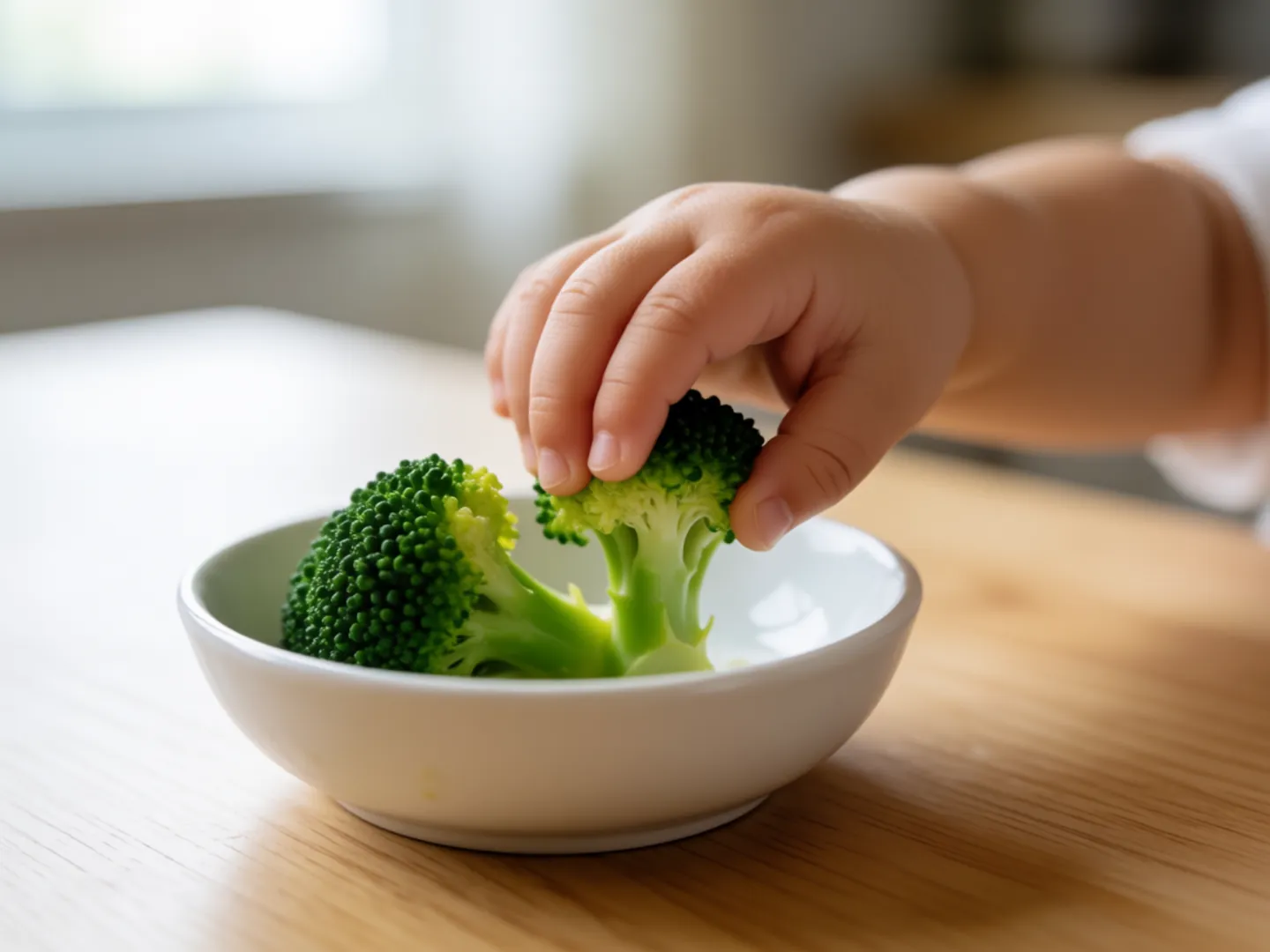
In a randomised trial, toddlers given a taste of a disliked vegetable every day for 14 days liked and ate more of it than children whose parents got advice alone.
Pick something people meet again and again to see what research found. The bar shows how clearly repetition raised liking in those studies.
Summaries of the published studies listed in the sources. General information, not advice for any individual child.
TWO NUMBERS WORTH KNOWING
Well studied, and testable at home.
One figure on how much research there is, one on how long it took to change a toddler's mind.
81
Articles in the meta-analysis of repeated exposure
The review drew 268 curve estimates from 81 articles and found a positive slope with a downturn: an inverted-U shaped curve.
REVIEW · MONTOYA ET AL. 2017
14 days
Days of daily tastes in the vegetable trial
156 parents of 2 to 6 year olds took part. Only the daily-taste group showed significant increases in liking, ranking and eating the vegetable.
TRIAL · WARDLE ET AL. 2003
The review found the inverted U for all visual stimuli but not for auditory ones, and concluded that existing models of the effect do not fully explain the findings.
FOUR WAYS TO USE IT
Small, repeated, no pressure.
The NHS advice on fussy eating fits the research: keep offering, stay calm and let familiarity do the work.
Offer a little, often
In the trial, a small daily taste of the same vegetable for two weeks made the difference.
Go back to old refusals
The NHS says to keep returning to foods a child did not like before, because children's tastes change.
Do not force it
If food is rejected, the NHS suggests taking it away without comment and trying again another time.
Eat together
Children learn to enjoy new foods by copying, so the NHS suggests eating with them as often as you can.
AI-generated image, not a photograph of a real person or place.AI-generated image, not a photograph of a real person or place.
WHY IT HAPPENS
Memory may be part of the story.
One explanation is memory: in the music study, brain areas linked to retrieval and working memory were active according to how often a melody had been heard, even though people were only asked how much they liked it.
The 2017 review found the effect depends on details such as how long each exposure lasts and when ratings are taken, and called for new models. Familiar does not always mean favourite, but it often gives things a head start.
Questions
Questions people ask
What is the mere-exposure effect?
It is the finding that repeated exposure to something, such as a picture, a tune or a food, tends to increase how much people like it, even without any other reason to.
Does it go on forever?
No. A 2017 meta-analysis of 81 articles found an inverted-U pattern: liking rises with repeated exposure and can then fall. This was clearest for visual stimuli.
Can it help a child try vegetables?
In a randomised trial with 2 to 6 year olds, a daily taste of a disliked vegetable for 14 days increased liking and eating more than advice alone. The NHS also suggests offering foods again calmly.
Why do I prefer my face in the mirror?
Probably because that is the version you see most. A study found adults prefer the mirror image of their own face but the true image of familiar faces, with the pattern emerging by around age 5 to 7.
Does it work for music?
In one brain-imaging study, the melodies people heard most often were the ones they liked most. The 2017 review did not find the inverted-U pattern for sounds, only for visual stimuli.